Cost-Effective Solutions for Implementing Dedicated Outdoor Air Systems in Your Facility

Understanding Dedicated Outdoor Air Systems (DOAS)
What is a Dedicated Outdoor Air System?
A dedicated outdoor air system delivers conditioned fresh air directly to occupied spaces without mixing it into the main recirculation loop. This setup isolates ventilation from temperature control, which cuts energy waste and improves precision. Facilities install these units to meet strict ventilation codes while reducing the load on existing air conditioning equipment. Engineers size the dedicated outdoor air system based on occupancy, building envelope, and local climate data so the unit supplies exact airflow volumes. The approach avoids over-ventilation during low-occupancy periods and supports demand-controlled strategies that further lower operating costs. Companies choose this configuration because it simplifies compliance and delivers measurable savings on utility bills.
Unlike traditional mixed-air systems that blend return air with outdoor intake, a DOAS uses separate ductwork and dedicated conditioning coils to treat 100 percent outdoor air to a neutral temperature and humidity level before distribution. This separation allows the primary HVAC equipment to handle only sensible loads from internal gains such as lighting, equipment, and occupants. In practice, ventilation rates are calculated using ASHRAE Standard 62.1 guidelines, typically targeting 15 to 20 cubic feet per minute per person plus additional airflow for building-related contaminants. By decoupling these functions, engineers can right-size chillers and air handlers, often reducing total cooling capacity by 20 to 30 percent compared with constant-volume designs. Real-time occupancy sensors and CO2 feedback loops enable the system to modulate supply volumes dynamically, preventing energy penalties during nights, weekends, or partial-load conditions common in modern office and industrial settings.
Benefits of Using DOAS for Air Quality
DOAS units maintain consistent outdoor air volumes that dilute indoor pollutants and stabilize carbon dioxide concentrations. By decoupling ventilation from sensible cooling, the system prevents humidity spikes that foster mold growth. Workers experience fewer respiratory complaints, and equipment lasts longer because filters capture particulates before they reach sensitive servers or production lines. Facilities also record lower maintenance calls on air conditioning coils since less unconditioned air passes through them. The dedicated outdoor air system therefore improves both occupant health and operational uptime while keeping energy expenses predictable.
Independent studies of commercial buildings retrofitted with DOAS show average reductions in indoor volatile organic compounds of 35 to 50 percent and measurable drops in absenteeism linked to respiratory issues. Because the system preconditions air to a dew point below 55 degrees Fahrenheit before distribution, relative humidity in occupied zones stays within the 40 to 55 percent range recommended for both comfort and microbial control. In addition, high-efficiency particulate filtration at the DOAS intake protects downstream coils and terminal units from fouling, extending service intervals and preserving heat-transfer efficiency. These combined effects translate into lower lifecycle costs and verifiable improvements in indoor environmental quality metrics tracked by facility managers.
Key Components and Engineering Considerations
Essential Components of a Dedicated Outdoor Air System
Core elements include a high-efficiency enthalpy wheel or plate heat exchanger, variable-speed supply and exhaust fans, MERV-rated filtration banks, and modulating hot-gas reheat coils. Controls integrate with building automation through a digital interface that tracks temperature, humidity, and airflow in real time. In oil and gas settings, explosion-proof motors and corrosion-resistant coatings protect against harsh environments. Data centers add rackmount monitoring sensors that feed performance data directly to facility dashboards. These components work together to deliver precise ventilation without oversized equipment, which keeps first costs and ongoing maintenance manageable.
Enthalpy wheels typically recover 70 to 85 percent of both sensible and latent energy from exhaust air, while plate exchangers offer similar performance with zero cross-contamination risk in applications requiring strict isolation. Variable-frequency drives on supply and exhaust fans allow turndown ratios of 10:1 or better, matching ventilation to instantaneous demand. MERV 13 or higher filters remove fine particulates and bioaerosols, and hot-gas reheat coils provide precise humidity control without additional energy input from separate heating sources. In hazardous locations, Class I Division 2 motors and NEMA 4X enclosures ensure safe operation, while data-center installations often incorporate particle counters and differential-pressure transducers that integrate directly with DCIM platforms for predictive maintenance alerts.
Engineering Challenges and Solutions
Engineers often face space constraints and duct routing obstacles when retrofitting a dedicated outdoor air system. Compact packaged units with side-by-side intake and exhaust paths solve many layout issues. In three-phase power environments, soft-start drives reduce inrush current and protect electrical infrastructure. Harsh climates require freeze-protection sequences on heat exchangers, while coastal sites demand stainless-steel cabinets. Proper engineering also addresses sound attenuation so rooftop units do not disturb nearby workspaces. These targeted solutions maintain reliability without inflating project budgets.
During retrofits, engineers frequently employ 3D laser scanning to map existing ceiling plenums and identify viable routing paths for the additional dedicated ducts. Where vertical clearance is limited, low-profile units with stacked heat exchangers and internal bypass dampers can be installed within the same footprint as legacy equipment. Freeze-protection algorithms monitor outdoor-air temperatures and activate electric preheat or glycol loops when conditions approach 32 degrees Fahrenheit, preventing coil damage without continuous energy waste. Acoustic analyses guide the selection of silencers and vibration isolators, ensuring radiated sound levels remain below NC-35 in adjacent office areas while preserving the aerodynamic performance of the fans.
Calibration for Optimal Performance
Accurate calibration ensures the dedicated outdoor air system supplies design airflow under all load conditions. Technicians use anemometers and pressure transducers to verify fan curves, then adjust variable-frequency drives until measured volumes match specifications. Humidity sensors require periodic zeroing to prevent drift that could increase latent loads on air conditioning equipment. Calibration logs become part of the facility’s preventive maintenance program, allowing early detection of filter loading or wheel seal wear. Regular tuning sustains energy savings and prevents costly downtime in critical applications such as server rooms or process areas.
Commissioning protocols typically include full airflow traverses at multiple fan speeds, verification of enthalpy-wheel effectiveness using temperature and humidity measurements upstream and downstream of the wheel, and functional testing of demand-controlled ventilation sequences. Sensor calibration follows NIST-traceable standards, with CO2 and humidity instruments checked quarterly in high-occupancy zones. Trend data logged by the building automation system reveals gradual increases in static pressure that signal filter loading, enabling condition-based maintenance rather than fixed calendar schedules and thereby optimizing both energy use and component life.
Cost-Effective Applications of DOAS in Various Industries
Implementing DOAS in Oil and Gas Facilities
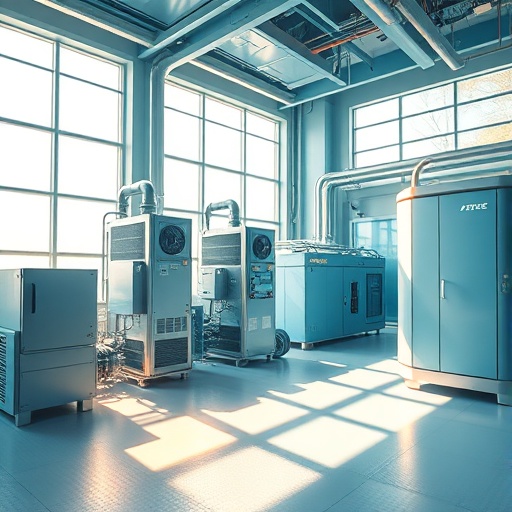
Oil and gas sites demand robust ventilation to control fugitive emissions and protect personnel. A dedicated outdoor air system supplies fresh air to control rooms and process buildings while maintaining negative pressure in hazardous zones. Explosion-proof components and redundant fans add upfront cost, yet the system reduces total air conditioning tonnage because it handles only ventilation loads. Facilities report lower electrical demand charges and extended filter life on main air handlers. The approach delivers compliance with safety codes at a fraction of the expense required by older constant-volume designs.
API and NFPA standards require minimum ventilation rates in classified areas to dilute flammable vapors below 25 percent of the lower explosive limit. DOAS units sized for these rates incorporate redundant explosion-proof fans and automatic transfer switches that maintain airflow during single-point failures. Because the system conditions only the required outdoor air volume rather than the entire recirculation stream, peak electrical demand drops by 15 to 25 percent, producing measurable reductions in utility demand charges. In addition, corrosion-resistant coatings and stainless-steel condensate pans extend equipment life in salt-laden or chemically aggressive atmospheres typical of coastal refineries.
Utilizing DOAS for Data Center Servers
Data centers rely on precise environmental control to protect rackmount servers from heat and contaminants. A dedicated outdoor air system preconditions outside air before it enters the white space, allowing the primary cooling loop to focus on sensible heat removal. This separation cuts chiller runtime and extends the life of CRAC units. Operators integrate the outdoor air system with building management platforms that adjust airflow based on server load, further trimming energy use. The result is improved reliability and lower power usage effectiveness scores without compromising air quality.
By supplying air at a neutral 70 to 75 degrees Fahrenheit and 40 to 50 percent relative humidity, the DOAS eliminates the need for the primary cooling system to perform dehumidification, freeing capacity for higher rack densities. In free-cooling climates, the system can operate in economizer mode for thousands of hours annually, reducing annual chiller energy by up to 40 percent. Integrated controls coordinate with rack-level temperature sensors to maintain supply-air temperature within one degree of setpoint, supporting the tight environmental tolerances required for high-performance computing equipment while keeping PUE values below 1.3 in many installations.
Cost Considerations for Different Applications
Project economics vary by industry and climate. Oil and gas installations emphasize durability and safety certifications that raise equipment prices, yet payback arrives through reduced shutdown risk. Data centers achieve rapid returns via lower utility bills and higher server uptime. Commercial offices benefit from smaller air conditioning equipment and simpler controls. Across all applications, the dedicated outdoor air system reduces total connected load and qualifies for utility rebates, making the initial investment attractive when evaluated over a ten-year horizon.
Life-cycle cost analyses typically show simple paybacks of three to six years for data-center projects and four to eight years for industrial facilities when utility incentives and reduced maintenance are included. Commercial office buildings often realize first-cost savings by downsizing chillers and rooftop units, offsetting the added expense of dedicated ductwork. Over a ten-year period, energy modeling consistently demonstrates cumulative savings of 20 to 35 percent in HVAC operating costs compared with code-minimum mixed-air systems, with additional value realized through improved occupant productivity and reduced equipment replacement frequency.
Enhancing Reliability and Performance
Maintaining Reliable Airflow with DOAS
Reliability starts with redundant fan arrays and automatic failover sequences that keep outdoor air flowing during motor or VFD faults. Scheduled filter changes and enthalpy wheel inspections prevent gradual performance loss. In high-stakes environments, facilities install differential pressure sensors that alarm when airflow drops below setpoints. These measures ensure continuous dilution of carbon dioxide and other contaminants, protecting both people and sensitive equipment without unexpected service interruptions.
Redundant fan arrays configured in N+1 arrangements allow the system to maintain design airflow even if one fan fails, with automatic speed compensation on remaining units. Predictive maintenance platforms analyze vibration signatures and motor current to forecast bearing wear weeks in advance, enabling parts replacement during planned outages. In mission-critical facilities, dual power feeds and uninterruptible power supplies for controls further guarantee uninterrupted ventilation during utility disturbances.
Integrating DOAS with Existing Air Conditioning Systems
Integration requires careful coordination of setpoints and sequences. The dedicated outdoor air system supplies neutral-temperature air that the main air conditioning units then temper to room conditions. Building automation platforms link the two systems through a common interface, enabling demand-controlled ventilation that trims outdoor air during unoccupied hours. Proper commissioning verifies that the combined setup does not create pressure imbalances or short-circuit airflow paths. Successful integration delivers both energy savings and consistent comfort.
Sequence-of-operation documentation specifies that the DOAS maintains a discharge temperature of 70 degrees Fahrenheit year-round, while zone-level terminal units or variable-air-volume boxes provide final sensible trimming. BACnet or Modbus communication ensures that occupancy schedules and CO2 readings from the main building automation system directly modulate DOAS fan speeds. Post-installation functional testing confirms neutral pressure relationships between zones and verifies that minimum outdoor air rates are maintained even when primary air handlers operate at low speed.
Monitoring and Managing Carbon Dioxide Levels
Continuous carbon dioxide sensors placed in return air streams and occupied zones feed data to the dedicated outdoor air system controller. When levels rise above 800 ppm, the unit increases ventilation until concentrations normalize. This closed-loop strategy avoids over-ventilation while meeting ASHRAE guidelines. Facilities that monitor these metrics report fewer occupant complaints and lower overall energy consumption because the system responds only when needed.
Modern controllers apply proportional-integral algorithms that ramp ventilation rates smoothly, preventing sudden changes in space pressure or temperature. Data trending reveals daily occupancy patterns that allow facilities to refine time-of-day schedules and further optimize energy use. In high-density spaces such as conference rooms, peak CO2 concentrations rarely exceed 900 ppm when the system is properly tuned, providing documented compliance with both ASHRAE 62.1 and WELL Building Standard requirements.
Innovative Technologies in Outdoor Air Systems
The Role of Ozone in Air Quality Management
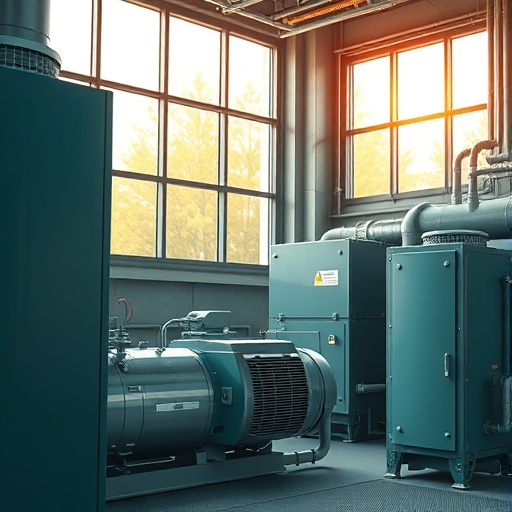
Some advanced dedicated outdoor air system designs incorporate controlled ozone generation to neutralize volatile organic compounds before air enters the building. The process occurs downstream of filtration and upstream of the supply fan, ensuring safe residual levels. Operators calibrate ozone output to match real-time contaminant loads, which further improves indoor air quality without raising energy use. This technology proves especially useful in industrial settings where process emissions challenge standard filtration alone.
Photocatalytic or corona-discharge ozone generators sized at 0.02 to 0.05 parts per million residual concentration oxidize formaldehyde, toluene, and other VOCs at efficiencies above 70 percent. Integrated sensors continuously monitor ozone levels and modulate generator output to stay well below the 0.05 ppm OSHA permissible exposure limit. In pharmaceutical and semiconductor cleanrooms, this supplemental treatment reduces the load on activated-carbon filters and extends their service life by 30 to 50 percent.
Three-Phase Systems and Their Advantages
Three-phase motors and drives in outdoor air systems deliver smoother torque and higher efficiency than single-phase alternatives. Variable-frequency drives modulate fan speed across a wide range, matching ventilation to actual demand. The configuration reduces electrical stress during startup and supports precise airflow control that single-phase units cannot achieve. Facilities gain lower operating costs and extended equipment life while maintaining the reliability required for critical applications.
Premium-efficiency three-phase motors achieve full-load efficiencies above 94 percent, and VFDs further improve part-load performance by reducing motor speed in proportion to airflow demand. Soft-start capability limits inrush current to 150 percent of full-load amperes, protecting transformers and switchgear. In facilities with on-site generation, the lower harmonic distortion of active-front-end VFDs minimizes interference with sensitive instrumentation and improves overall power quality.
The Future of Outdoor Air Systems in Facility Management
Emerging controls embed machine-learning algorithms that predict ventilation needs from occupancy patterns and weather forecasts. These systems adjust the dedicated outdoor air system in advance, minimizing peak demand charges. Integration with digital twins allows engineers to test retrofit scenarios before installation, further controlling cost. As codes tighten and energy prices rise, the outdoor air system will remain a central strategy for sustainable, high-performance facilities across every sector.
Cloud-connected analytics platforms aggregate data from multiple sites to refine predictive models, enabling portfolio-wide optimization of ventilation strategies. Digital-twin simulations evaluate the impact of future code changes or equipment degradation on energy use and comfort, supporting proactive capital planning. As decarbonization mandates expand, DOAS units paired with heat-pump technology and on-site renewables are positioned to meet both indoor-air-quality and net-zero energy goals simultaneously.
See Also
- Innovative Applications of Dedicated Outdoor Air Systems in the Oil and Gas Industry
- How Dedicated Outdoor Air Systems Improve Energy Efficiency in Commercial Buildings
- Understanding the Calibration Needs of Dedicated Outdoor Air Systems for Optimal Performance
- Unlocking the Benefits of Dedicated Outdoor Air Systems for Enhanced Air Quality